
Thursday, May 15 — 1 to 1:45 p.m.
Chair

Silvia Barcellos
University of Wisconsin–Madison
Silvia Helena Barcellos is an Associate Professor of Population Health Sciences and Public Affairs at UW-Madison. She is a health economist, and her work aims to understand the interplay between socio-economic status and health across the lifespan, with a focus on the role public policy plays on such relationships. One area of research investigates how education (and different educational policies) affects health, cognition, and SES at older ages, including how individual genetics shape such relationships.
Panelists

Shu Cao
University of Wisconsin–Madison
Shu Cao is a second-year Master’s student in Statistics at UW-Madison, with a strong interest in statistical genetics.
Presentation or paper
Quantifying Genetic Effect Heterogeneity Across Ancestral Populations

Philipp Dierker
Max Planck Institute for Demographic Research
Philipp Dierker is a postdoctoral research scientist in the Department of Social Demography at the Max Planck Institute for Demographic Research, Germany, interested in the intersection of family, health, and genetics.
Presentation or paper
Do Genetics Shape Mental Health Trajectories Around Partnership Transitions?

Senan Hogan-Hennessy
Cornell University
Senan is a PhD candidate at Cornell University’s Economics Department, working in labour economics. His research uses observational causal methods to study economic inequality – asking through which mechanisms gaps in education and income arise and where policy can most effectively intervene. His dissertation develops and applies a framework for causal mediation analysis in quasi-experimental settings, with applications to labour markets, genetics, and higher education.
Presentation or paper
The Direct and Indirect Effects of Genetics and Education
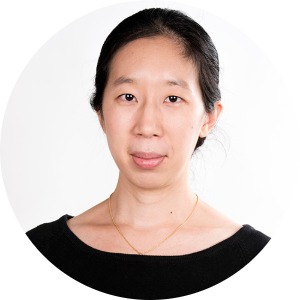
Sally Kuo
Rutgers University
Dr. Sally Kuo is an Assistant Professor of Psychiatry in the Genes, Environment, and Neurodevelopment in Addictions (GENA) research program at Robert Wood Johnson Medical School, Rutgers University. Her research focuses on how risk and protective factors across multiple levels (e.g., genetic and environmental influences) accumulate over the lifespan to influence substance use trajectories and social functioning. She received her PhD in Developmental Psychology from the Institute of Child Development at the University of Minnesota and completed postdoctoral fellowships at Arizona State University and Virginia Commonwealth University.
Presentation or paper
Understanding the Influence of Spousal Substance Use Disorders on Alcohol Use Disorder during Marriage: A Genetic and Dyadic Approach

Stephanie Sheir
University College London
Stephanie Sheir is a PhD student in behavioural genetics at University College London (UCL). Her research spans causal inference and complex trait genetics, with a particular interest in mental health and cognitive outcomes.
Presentation or paper
The Protective Effect of Education on Mental Health is Driven by Cognition

Wesley Wang
Purdue University
Wesley Wang is a doctoral student pursuing a dual-title PhD in Sociology and Gerontology at Purdue University. He earned his MPhil in Sociology and Demography from the University of Oxford. His research explores how genetic and environmental factors jointly shape outcomes across the life course, with an emphasis on social inequality and biological ageing. Wesley is particularly interested in identifying biosocial pathways through which early-life adversity contributes to detrimental health outcomes in later adulthood.
Presentation or paper
Polygenic Indices and Pathways to Educational Attainment and Early Career Outcomes