
Thursday, May 14 — 10:15 to 11 a.m.
Chair

Lauren Schmitz
University of Wisconsin–Madison
Lauren Schmitz is an associate professor of public affairs at UW-Madison. Her research uses data and methods from economics, sociology, population health, and genomics to examine how social inequality erodes health at a molecular level and speeds up the aging process. She takes a life course view of aging that considers how social disadvantage shapes health from the prenatal period through adulthood and into old age. She received her PhD in economics from the New School for Social Research and her MS in Human Genetics from the University of Michigan.
Panelists
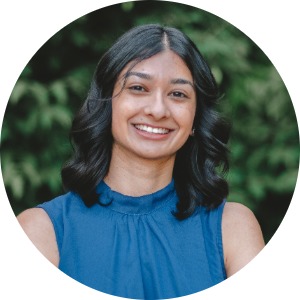
Aarti Bhat
University of Minnesota-Twin Cities
After completing her PhD in Human Development and Family Studies and Demography at the Pennsylvania State University, Aarti is currently a Postdoctoral Fellow at the Minnesota Population Center. Aarti identifies as a population health researcher, with interests in the contribution of housing insecurity and other economic/recessionary events on life course health outcomes; and is particularly interested in the mechanisms by which these economic stressors can get under the skin to affect physiological and epigenetic indicators of health. Aarti is also interested in disparities in exposures to economic stressors based on sociodemographic characteristics, as well as disparities in the effects that these exposures have on health across the life course. Her interdisciplinary training has allowed her to cultivate expertise at the intersection of social environments and population health, translational science, and psychosocial determinants and biological pathways to healthy aging.
Presentation or paper
Housing Insecurity Across Childhood and Adolescence and DNA Methylation-Based Biological Aging: Evidence from the Future of Families and Child Wellbeing Study
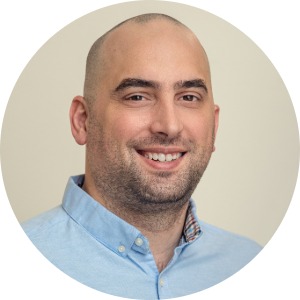
Guillaume Butler-Laporte
McGill University
Dr. Butler-Laporte is an infectious diseases clinician at the McGill University Health Centre and a researcher at the LDI Centre for Clinical Epidemiology since 2024. His lab uses and develops genetic epidemiology and bioinformatics tools to study infectious diseases, including their association with non-infectious diseases.
Presentation or paper
Identifying Novel Therapeutic Targets for Dermatophyte Infections
Tobias Edwards
University of Minnesota-Twin Cities
Tobias Edwards is a graduate student in the behavioral genetics program at the University of Minnesota, Twin Cities. He is interested in causal inference, social attitudes, cognitive abilities, and genome-wide association studies (GWAS).
Presentation or paper
A Genome-Wide Association Study of Religiosity, Spirituality, and Religious Attendance

Yuxin Liu
Princeton University
Yuxin Liu is a fourth-year doctoral student in Sociology at Princeton University, with a certificate in demography from the Office of Population Research. She graduated from the University of Wisconsin–Madison in 2022 with a B.S. in Sociology, Mathematics, and Education Studies, along with certificates in History and German. Her research spans social genomics, migration, and education, and she continues to explore new directions. Her dissertation examines migrant selectivity and outcome heterogeneity through the lens of social genomics. In her free time, she enjoys reading, watching anime, and playing video games in the company of her beloved little fussy cat, 小秋 (“Autumn”).
Presentation or paper
Genetic Selectivity in Migration: Polygenic Insights into Heterogeneous Outcomes of Domestic Migration in the US
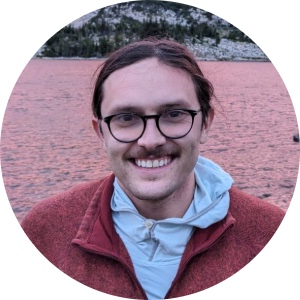
Elijah Watson
Northwestern University
Elijah Watson is a PhD candidate in Anthropology and an MPH student in Epidemiology at Northwestern University, supported by an NIH F31 Predoctoral Fellowship from the National Institute on Aging and a previous National Science Foundation Graduate Research Fellowship (GRFP). He will complete both degrees in spring 2026. His research integrates biomarkers of aging—especially epigenetic clocks—with causal inference methods and ecosocial theory to understand how social and environmental conditions become embodied across the life course. He is also interested in integrating, translating, and applying causal inference frameworks from biostatistics, econometrics, and epidemiology to questions concerning population health and aging.
Presentation or paper
The Developmental Origins of Health and Biological Aging: Evidence from Sequential Climate and Political Shocks to a Filipino Birth Cohort

Luyin Zhang
Princeton University
Luyin Zhang is a PhD candidate in Population Studies at Princeton University. Her research lies at the intersection of demography, sociology, and genomics, with a focus on inequality, health, and population processes. She studies how social environments and genetic factors jointly shape life-course outcomes, with substantive interests in assortative mating, substance use, and health disparities. Methodologically, her work develops and applies sociogenomic tools and new measurement strategies to improve the study of inequality and population heterogeneity in diverse populations.
Presentation or paper
Utilizing DNA to Measure Within-Race Skin Tone Gradients

Weilong Zhang
University of Cambridge
Dr. Weilong Zhang is an associate professor in the Faculty of Economics and a Fellow at Selwyn College, University of Cambridge. His research examines how genetic endowment and personality traits shape individual decision-making in both labor market participation and household dynamics. He is especially interested in incorporating genetic factors into economic models to improve our understanding of labor market and educational policies. He earned his Ph.D. in Economics from the University of Pennsylvania and holds a Master’s in Economics as well as a Bachelor’s in Mathematics from Renmin University of China. His work has been published in leading journals, including the Journal of Political Economy, Review of Financial Studies, Journal of Labor Economics, Quantitative Economics, and European Economic Review.
Presentation or paper
Revisiting the Fetal Origins Hypothesis: Gene-by-Environment Interactions and Biological Aging