
Thursday, May 14 — 9 to 10 a.m.
Chair

Qiongshi Lu
University of Wisconsin–Madison
Dr. Qiongshi Lu received his B.S. in mathematics from Tsinghua University in 2012 and Ph.D. in biostatistics from Yale University in 2017. He is currently an Associate Professor in the Department of Biostatistics and Medical Informatics and Director of the Genomic Sciences Training Program at University of Wisconsin-Madison. Dr. Lu’s research focuses on developing statistical methods to study complex trait genetics. In particular, he is interested in noncoding genome annotation, genetic risk prediction, genetic correlation estimation, and gene-environment interaction.
Panelists
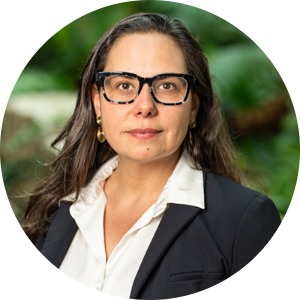
Silvia Helena Barcellos
University of Wisconsin-Madison
Silvia Helena Barcellos is an Associate Professor of Population Health Sciences and Public Affairs. She is a health economist, and her work aims to understand the interplay between socio-economic status (SES) and health across the lifespan, with a focus on the role public policy plays on such relationships. One area of research investigates how education (and different educational policies) affects health, cognition, and SES at older ages, including how individual genetics shape such relationships. A second strand of research studies how genetic predisposition to different traits and diseases impacts health and SES trajectories for individuals and their families.
Presentation or paper
Intergenerational Effects of Genetic Risk for Dementia on Socio-Economic Outcomes

Titus Galama
Center for Economic and Soical Research, University of Southern California
Titus Galama, Ph.D., MBA, is a Professor of Economics at USC and Vrije Universiteit Amsterdam, Director of USC’s Center for the Study of Human Capital, and a Research Fellow at the Tinbergen Institute. Originally an award-winning astrophysicist, he later transitioned into economics, policy, and social-science genetics. He earned degrees in Physics and Astrophysics (University of Amsterdam), an MBA (INSEAD), and a Ph.D. in Economics (Tilburg University). His astrophysics work included major discoveries recognized by Science. He has published extensively, with around 70 peer-reviewed articles and thousands of citations. After roles at Caltech, L.E.K. Consulting, and RAND, his research now focuses on human capital and genetics. He is Lead (with von Hinke) of the European Social Science Genetics Network (ESSGN), a network of eight European/UK institutions, training 13 PhD students in social-science genetics and in the process building the network and advancing research.
Presentation or paper
Sources of Inequality at Birth: The Interplay Between Genes and Parental Socioeconomic Status
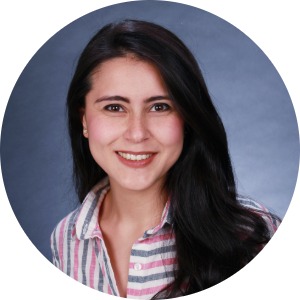
Dilnoza Muslimova
Vrije Universiteit Amsterdam
Dilnoza Muslimova is an applied microeconomist working at the intersection of genetics with economics of education, labour, and health. Her research uses random genetic variation within families and exogenous environmental/policy shocks to understand individual human capital formation and economic outcomes.
Presentation or paper
Personality Traits, Human Capital Formation, Economic Behavior and Demography: Exploiting Random Genetic Variation to Study the Causal Effects of Personality Traits